
-
Welcome To AG Paving Contractors Newton, CB22
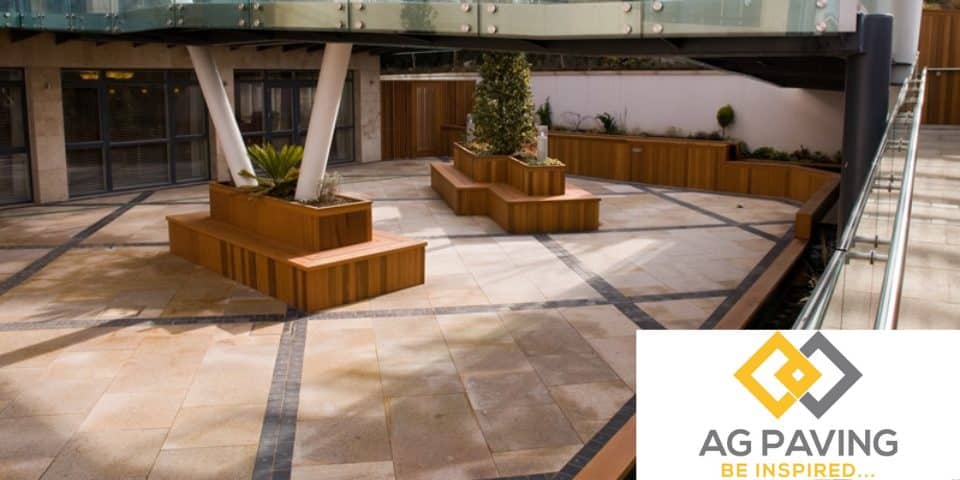
AG Paving is Newton, CB22 based paving contractor that serves Newton and surrounding areas. We provide a wide variety of paving and landscaping services at cost effective rates. We offer a total service; consultation, style, supply, and installation. Whether you are searching for a complete garden overhaul or an easy clean we make certain to have the best service to match both your taste and budget. We have a huge series of patio area and paving options for you to pick from consisting of; Indian sandstone, granite, limestone, cobblelock, gravel and concrete pieces just to name a few. We specialise in the setup of natural stone paving, for both driveways and outdoor patios. Our quality and rates will not be beaten. Why not browse through our gallery to see our vast variety of paving choices and we make certain you’ll find something to suit your taste. We source our quality products from just the best and well prominent suppliers to ensure that the paving we provide to you will stand the test of time. Quality materials combined with our experience in installation implies that you can feel confident you will have a beautiful driveway or patio for many years to come.
AG Paving Newton, CB22 – Driveways, Patio and Garden Contractors
A stunning brand-new driveway or outdoor patio location will make a considerable change to your house. We offer a broad range in paving designs to match any styled home, be it of modern, traditional or modern style.
We also provide a wide range of colour and style alternatives from which you can pick the most suitable design of paving in Newton for your house. We will use advice on style, design and all technical aspects of the driveway or patio installation.
We set up a vast array of domestic and industrial paving; from forecourts, driveways, courses and outdoor patios through to your garden area with flower beds, raised flower beds, turfing and slabbing.
Weed complimentary and simple upkeep, paving will not only make your life easier however can also add value to your home and boost its appearance. Choosing the most suitable paving system for your house is very important as it represents a long-lasting investment in your residential or commercial property. All our work is performed by our own extremely skilled paving contractor in Newton, CB22.
When you have actually picked the style and colour combination, you can then likewise choose from a range of customized created features such as circles, diamonds or even having your initials embedded. This will ensure your paving is genuinely special.

Our services include:
- Block Paving
- Indian Stone Paving
- Design
- Walling
- Fencing
- Brick
- Cobbles
- Concrete
- Tarmac
- Flagging
- Drainage
- Patios
- Landscaping
- Gates/Railings
Driveways Newton, CB22
We are specialists at Driveways Newton. We can lay and develop budget friendly and bespoke driveways for our consumers. All our work is done to the highest of standards. We use just quality driveway materials starting from the setup of your base to the finished surface area of your driveway to guarantee a resilient driveway installation.
Paving Newton, CB22
We pride ourselves on the quality of our Paving Newton. We provide a paving service which includes laying paving, changing old driveways and constructing outdoor patios with garden paving in Newton, CB22.
NOTE: Please check out other services Block Paving, Driveways & Patios, Commercial Driveways, Resin Driveways, Gravel Driveways, Landscaping and benefit from our packages. Or just simply contact now AG Paving for a free on-site quote. Please also have a look at our amazing testimonials, about us and gallery. Our blog as well.
Useful Links: Royal Horticultural Society Ireland, Irish Garden Plant Society, Garden & Landscape Design Association.
WHY CHOOSE US FOR YOUR PAVING TASK:
- We are fully registered paving and patio area installers.
- AG Paving is proud to be a member of the Britpave, the British Cementitious Paving Association. The Britpave, the British Cementitious Paving Association is maintained just for knowledgeable competent tradesmen who are masters in their field. In order to end up being a member and keep membership, all members much keep high requirements of workmanship in all of their tasks. To become a member, we went through the guilds’ rigorous vetting procedures and verifications prior to we were accepted as a member. As an outcome, you as the consumer can feel confident that you are working with a paving contractor with a proven performance history and validated history of high standards of work.
- We have an abundance of experience in designing and installing all types of paving products; Granite, Sandstone, Limestone, cobblelock, slabs, patios, driveways, gravel, pebble, natural stone and so on
- We provide you a complete bundle. We will supply and install your driveway, garden paving or patio area so you just have to relax and enjoy the change.
- We cover all parts of Newton, CB22.
- We utilize only high quality and trusted suppliers for our paving products such as Kilsaran, Roadstone, Double l concrete and All Stone. This makes sure the quality and toughness of the items we work with.
- Our large paving setup experience paired with high quality paving and patio materials and our attention to detail, all combine to guarantee you, the client, a high quality paving project finished to the greatest of standards.
- Our customers are our organisation, we strive to guarantee your satisfaction throughout all phases of your paving or patio area job. We are kept hectic mainly by word of mouth so our customers’ fulfillment is our main top priority.
- We do what we say and we say what we do. We complete on time as agreed and with no concealed bonus.
- We provide complimentary call outs and quotations. We will call out to view your existing garden location. At this call out we will discuss possible paving choices for your property and will reveal you samples of the paving products that would suit your project and budget plan.
Sir Isaac Newton FRS (25 December 1642 – 20 March 1726/27) was an English mathematician, physicist, astronomer, alchemist, theologian, and author who was described in his time as a natural philosopher. He was a key figure in the Scientific Revolution and the Enlightenment that followed. His pioneering book Philosophiæ Naturalis Principia Mathematica (Mathematical Principles of Natural Philosophy), first published in 1687, consolidated many previous results and established classical mechanics. Newton also made seminal contributions to optics, and shares credit with German mathematician Gottfried Wilhelm Leibniz for developing infinitesimal calculus.
In the Principia, Newton formulated the laws of motion and universal gravitation that formed the dominant scientific viewpoint for centuries until it was superseded by the theory of relativity. Newton used his mathematical description of gravity to derive Kepler’s laws of planetary motion, account for tides, the trajectories of comets, the precession of the equinoxes and other phenomena, eradicating doubt about the Solar System’s heliocentricity. He demonstrated that the motion of objects on Earth and celestial bodies could be accounted for by the same principles. Newton’s inference that the Earth is an oblate spheroid was later confirmed by the geodetic measurements of Maupertuis, La Condamine, and others, convincing most European scientists of the superiority of Newtonian mechanics over earlier systems.
Newton built the first practical reflecting telescope and developed a sophisticated theory of colour based on the observation that a prism separates white light into the colours of the visible spectrum. His work on light was collected in his highly influential book Opticks, published in 1704. He also formulated an empirical law of cooling, made the first theoretical calculation of the speed of sound, and introduced the notion of a Newtonian fluid. In addition to his work on calculus, as a mathematician Newton contributed to the study of power series, generalised the binomial theorem to non-integer exponents, developed a method for approximating the roots of a function, and classified most of the cubic plane curves.
Newton was a fellow of Trinity College and the second Lucasian Professor of Mathematics at the University of Cambridge. He was a devout but unorthodox Christian who privately rejected the doctrine of the Trinity. He refused to take holy orders in the Church of England, unlike most members of the Cambridge faculty of the day. Beyond his work on the mathematical sciences, Newton dedicated much of his time to the study of alchemy and biblical chronology, but most of his work in those areas remained unpublished until long after his death. Politically and personally tied to the Whig party, Newton served two brief terms as Member of Parliament for the University of Cambridge, in 1689–1690 and 1701–1702. He was knighted by Queen Anne in 1705 and spent the last three decades of his life in London, serving as Warden (1696–1699) and Master (1699–1727) of the Royal Mint, as well as president of the Royal Society (1703–1727).
Isaac Newton was born (according to the Julian calendar in use in England at the time) on Christmas Day, 25 December 1642 (NS 4 January 1643) at Woolsthorpe Manor in Woolsthorpe-by-Colsterworth, a hamlet in the county of Lincolnshire. His father, also named Isaac Newton, had died three months before. Born prematurely, Newton was a small child; his mother Hannah Ayscough reportedly said that he could have fit inside a quart mug. When Newton was three, his mother remarried and went to live with her new husband, the Reverend Barnabas Smith, leaving her son in the care of his maternal grandmother, Margery Ayscough (née Blythe). Newton disliked his stepfather and maintained some enmity towards his mother for marrying him, as revealed by this entry in a list of sins committed up to the age of 19: “Threatening my father and mother Smith to burn them and the house over them.” Newton’s mother had three children (Mary, Benjamin, and Hannah) from her second marriage.
Paving Contractors Newton

Call 07478664953 to make an appointment
Or get an Instant Free Quote Now
AG Paving
The AG Paving Company are specialists in the installation of block paving, concrete setts, paving slabs and natural stone for driveways, paths and patios.
Based in Northampton we work within a 100 mile radius and as an independent company we are able to supply and fit products from all the leading manufacturers.
We offer a free quotation without obligation
Address: We cover Northamptonshire and Surrounding Areas
Call: 07478664953
Email: info@agpaving.co.uk
Copyright © 2019 Agpaving.co.uk. All Rights Reserved. Website Design & SEO by Web Media Group